
Penguin editorial / 2026-10-01
Booklet Binding Options: Choosing the Right Finish for Your Hong Kong Print Job
Compare saddle stitching, perfect binding and wire binding by how readers use a booklet, its page count and artwork needs. Learn what to confirm with your printer before final files.
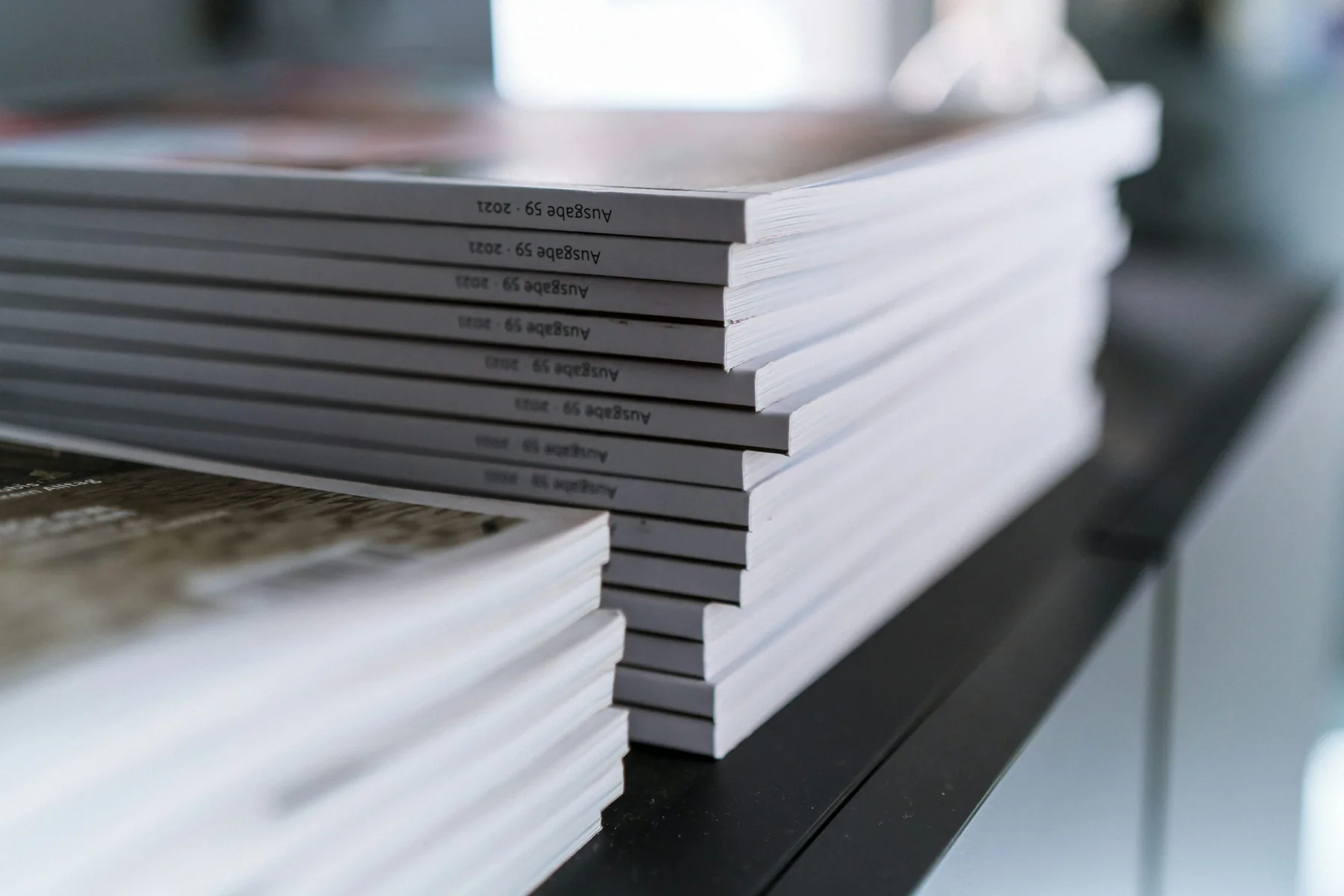
Binding changes how a booklet feels, opens and displays its artwork. Saddle stitching suits a slim handout, perfect binding gives a thicker publication a squared spine, and wire binding can keep a working document open on a desk. Choose by reader use, page count, paper and layout—not by a universal page threshold. Confirm the exact option and file requirements with your printer before artwork is final.
Three binding options, three reading experiences
Saddle stitching
Folded sheets are nested and secured with staples through the centre fold. This creates a compact booklet that opens readily and suits programmes, short catalogues and brochures.
Each folded sheet creates four page surfaces, so a conventional saddle-stitched booklet normally has a total page count in groups of four, including covers. If copy does not fit, edit it or plan a useful page or blank; do not assume the printer will revise pagination. Nested sheets can shift inner pages towards the fore-edge when trimmed, an effect called creep. Keep details clear of folds and trim lines, and ask whether the printer adjusts for it. Adobe’s booklet settings guide explains creep and related imposition controls.
Perfect binding
Perfect binding attaches gathered pages along a squared spine with adhesive and wraps a cover around the text block. Its flat spine can carry a title or brand, making it suitable for substantial catalogues, reports and product guides.
Pages do not open as freely as saddle-stitched or wire-bound pages, so give text and key image details room at the gutter. Spine width depends on page count and paper; request the printer’s template once these are set.
Wire binding
Wire binding, often called Wire-O or twin-loop wire, holds punched pages together along one edge. It suits workbooks, training materials, calendars and manuals that need to lie open or fold back.
The punched edge occupies space: keep essential text and graphics clear of the binding margin. Do not design a continuous image across the centre as if both pages form an uninterrupted spread. Confirm the safe area and punching position with the supplier. Wire and cover options vary by provider; confirm availability for your Hong Kong job.
Choose by purpose, then confirm production details
Start with the reader’s task: browse a handout, display a spine title or consult pages while taking notes. Then check thickness and finish with the printer. Paper weight affects bulk, so limits vary by stock and equipment; there is no universal page-count cut-off.
Before final artwork, share a concise brief:
- Finished size, estimated total pages including covers, and any intentional blanks.
- Intended use and opening behaviour: flat spreads, a printable spine or pages that fold back.
- Proposed text and cover stocks, plus any finish or insert under consideration.
- Artwork concerns such as full bleed, images crossing a spread, small gutter text or spine lettering.
- File format, safe margins, bleed, page order, spine template if relevant, and proof availability.
Set pages in reading order unless the printer requests spreads; imposition belongs to the printer’s workflow. Recheck page order, cover sides, bleed and spine dimensions before approval. Adobe describes separate imposition settings for saddle stitch and perfect binding; ask the supplier to confirm your setup.
If you are considering booklet printing options, share intended use, page count, paper preference and artwork status. Penguin Business Service can coordinate an enquiry with Penguin Printing; confirm binding availability, specifications and quotation for each project.
Frequently asked questions
Does saddle stitching always need a page count divisible by four?
For a conventional folded-sheet booklet, each sheet contributes four pages, so groups of four are standard. Ask how covers and blanks are counted.
Which binding is best for a booklet that must lie flat?
Saddle stitching and wire binding are both common choices when easy opening matters. Choose between a continuous spread and a page that folds back.
Can a perfect-bound spine carry a title?
It may be printable depending on width; request a template after confirming page count and stock.
Useful references
Adobe InDesign: booklet spacing, bleed, creep and signature settings describes production settings for saddle stitch and perfect-bound imposition. SAIC Service Bureau: saddle-stitch books explains folded-sheet construction, page grouping and why paper thickness affects practical limits.
For an enquiry about booklet printing in Hong Kong, contact Penguin Business Service on WhatsApp.